AI-driven security is the use of machine learning, behavioral analytics, and automation to protect, detect, prevent, and remediate cyber threats. Instead of relying only on human analysts or rule-based tools, modern platforms analyze millions of signals across endpoints, networks, users, and cloud applications to stop attacks faster and more accurately.
This approach matters because today’s threats move far quicker than traditional tools can respond. At the same time, organizations are dealing with much larger attack surfaces. Remote workers, cloud applications, hybrid networks… there are significantly more areas to secure compared to a decade ago.
AI-powered solutions provide a way to continuously monitor these environments. With an AI-driven cybersecurity tool, you can take action within seconds even when internal (human) teams are stretched thin. It is not a replacement for human expertise. Instead, it strengthens existing cybersecurity operations by surfacing real risks and automating the steps that used to take hours.
What Is AI-Driven Security and Why Does It Matter Today?
AI-driven security is a modern approach where cybersecurity systems analyze, learn, and respond to threats using automated models rather than static rules. At its core, it combines machine learning, behavior analytics, and automated decision engines to identify suspicious activity that traditional tools may miss.
AI enhances several familiar security layers:
- Firewalls that block, filter, and alert based on real-time behavior rather than fixed rules.
- Endpoint protection tools that detect, isolate, and scan devices using AI-driven threat scoring.
- Network monitoring systems that monitor, graph, and diagnose unusual traffic patterns.
- Email security systems that filter, block, and quarantine suspicious messages based on evolving patterns.
Why this matters today?
Cyber threats have also become far more automated. Attackers now generate phishing emails, mutate malware, and launch large-scale credential attacks with the help of AI, allowing them to move faster and with less effort than before. At the same time, workforces have become more distributed. Hybrid and remote teams rely on multiple devices and networks, expanding the attack surface beyond what traditional tools were designed to manage.
Cloud adoption adds to this complexity. Many organizations run workloads across Microsoft 365, Google Workspace, SaaS platforms, and several public clouds, creating a fragmented environment where consistent visibility is harder to maintain.
All of this places extra pressure on internal security teams. They are managing more alerts, more signals, and more potential entry points than ever. AI helps them cut through the noise by prioritizing real threats and automating the early stages of investigation, setting the stage for real-time detection and faster response.
How Do AI-Based Tools Detect Threats in Real Time?
As mentioned, AI-based security systems detect threats by analyzing activity across endpoints, networks, and user behavior. Instead of relying on fixed signatures or manual rules, these systems examine how an action behaves and compare it against patterns that indicate risk. This helps organizations identify threats that move too quickly (or too “quietly”) for traditional tools.
Behavior Analytics
Behavior analytics allows AI systems to understand what is normal inside an organization.
After learning patterns such as typical login hours, common file movements, or usual access routes, the system begins to notice when something deviates from that baseline. A login attempt from an unusual location, sudden privilege escalation, or rapid creation of new processes can trigger an alert.
This method is especially useful for detecting insider activity or compromised credentials. In many cases, these behaviors do not match any known malware signature, but the pattern itself is suspicious. AI gives businesses a way to catch these weak signals early, before they evolve into larger incidents.
Endpoint Intelligence
AI-enhanced endpoint tools evaluate a device’s behavior in real time. Rather than waiting for a file to match a known threat, the system observes how that file behaves the moment it runs. If a script begins modifying registry entries, creating hidden processes, or attempting to disable security controls, the endpoint solution flags it immediately.
This approach helps identify fileless attacks and new malware variants that have not been catalogued. The endpoint system can also isolate the device from the network if the behavior suggests ransomware activity or malicious automation. This is why modern EDR and XDR platforms have become essential for businesses with distributed teams or remote users.
Network Monitoring
Network-level AI monitors all traffic flowing between servers, endpoints, and cloud systems.
When a threat actor tries to move laterally, scan internal ports, or communicate with external command-and-control servers, the monitoring system notices patterns that do not match ordinary business activity. This may include repeated authentication failures, unusual data transfer volumes, or traffic sent to unfamiliar destinations.
Because the system analyses these patterns continuously, it can surface incidents that human analysts would likely miss, especially during peak hours. This helps organizations detect exploitation attempts before they reach critical systems or databases.
Email Security
Phishing is still the most common method attackers use in Malaysia. AI-driven email security solutions evaluate not just the content of a message but how it is written, where it comes from, and how closely it resembles known phishing tactics. They look for inconsistencies in writing style, sender reputation, link behavior, and even the structure of attached documents.
The system also compares incoming messages to past communications. If an email claims to be from a familiar partner but the tone or domain looks suspicious, AI marks it as risky. This helps protect users from brand impersonation, invoice fraud, and any attacks that are more convincing with AI-generated content.
How Do AI Security Platforms Respond to Threats Automatically?
AI-driven response is about speed. When a threat is detected, the system can take immediate action without waiting for human intervention. Here is how automated response works:
- Device Isolation If a device behaves suspiciously, AI-driven endpoint tools can isolate it from the network instantly. This prevents threats like ransomware from spreading to other servers or workstations.
- Blocking Malicious Connections Firewalls and network systems can automatically block IPs, domains, or ports linked to malicious behavior. This is especially useful for stopping command-and-control callbacks or unauthorized outbound traffic.
- Quarantining Files AI tools can quarantine or freeze suspicious files, scripts, or executables while analysis continues. This reduces risk without interrupting the entire system.
- Rolling Back Compromised Endpoints Modern ransomware protection tools can restore affected files using automated snapshot rollback. This immediately reverses encryption attempts and protects business continuity.
- Triggering Automated Playbooks Security Orchestration, Automation, and Response (SOAR) workflows use AI to trigger alerts, assign incident priorities, execute pre-defined remediation steps, and document the event for compliance and audit. This reduces the workload of internal teams and ensures every incident follows a structured response.
When Should a Business Consider AI Security and What Benefits Can They Expect?
AI-driven security becomes valuable the moment an organization starts to outgrow what traditional tools and manual teams can reasonably cover. As attack surfaces expand and threats become more automated, businesses need faster detection, better visibility, and a way to respond without waiting for human intervention. The following situations are common indicators that AI security should be considered.
When a business should start looking at AI-driven security
A larger or more distributed workforce
When teams work across multiple locations or from home, the number of devices, networks, and access points grows quickly. Each of these becomes a potential entry path for attackers.
Traditional tools were designed for centralized office networks and often struggle to track activity across remote endpoints, personal devices, and public Wi-Fi. AI-driven security helps close this gap by monitoring behavior across all connected devices and identifying risks even when users are spread across different environments.
A rise in phishing and attempted intrusions
Many Malaysian organizations are seeing more sophisticated phishing campaigns and credential attacks. These attempts often use social engineering, cloned login pages, or AI-generated messages that look authentic. Because attackers can now automate these attempts at scale, businesses may experience sudden spikes in login failures, suspicious emails, or identity-related alerts. AI-based tools help detect these patterns earlier by analyzing message structure, sender behavior, and login anomalies that traditional filters often miss.
Growing reliance on cloud applications
As companies integrate Microsoft 365, Google Workspace, CRM systems, and industry-specific SaaS tools, their data becomes distributed across many different platforms. This creates more locations where sensitive information is stored and accessed.
Without unified visibility, it becomes difficult for internal teams to understand who is doing what and whether an action is legitimate. AI security solutions help by correlating activity across cloud platforms, identifying irregular access patterns, and detecting risky configurations before they create vulnerabilities.
Limited cybersecurity manpower
Most security teams face the same challenge: too many alerts and not enough time. Manual investigation is slow, and many incidents go unnoticed simply because there are not enough analysts to review them. AI helps reduce this burden by sorting alerts, scoring risk levels, and automatically escalating incidents that require attention. This allows existing teams to focus on meaningful threats instead of spending hours filtering out noise.
Compliance or audit pressure
Organizations that follow frameworks such as ISO 27001, SOC 2, or industry-specific requirements often need stronger monitoring and detailed reporting. Manual log reviews and monthly compliance checks are no longer efficient in dynamic environments where changes happen daily.
AI-driven tools provide continuous monitoring and help create accurate audit trails, making it easier for businesses to demonstrate security controls and meet regulatory expectations.
Any history of ransomware or unauthorized access
A previous security incident is often the clearest sign that existing defenses are no longer sufficient. Ransomware, credential misuse, or unauthorized access suggests that attackers were able to bypass current safeguards or exploit blind spots in the environment. In these situations, AI-driven detection and automated response capabilities become valuable because they shorten the time between breach and containment and reduced the likelihood of repeated incidents.
What benefits organizations can expect
Once a business reaches the stage where manual tools and traditional processes can no longer keep up, AI-driven security provides a practical path forward. The same capabilities that help teams detect and investigate threats earlier also translate into clear business benefits:
- Faster detection AI spots risky behavior within seconds by evaluating patterns instead of relying only on known threat signatures.
- Lower false positives Automated models help reduce unnecessary alerts, which allows teams to focus on genuine issues.
- Twenty-four-seven monitoring AI never pauses, which is especially important for companies without a dedicated SOC.
- Better ransomware resistance Intelligent isolation, rapid blocking, and automated rollback features limit the impact of encryption attempts.
- Improved compliance readiness Consistent monitoring and automated reporting support audit requirements and internal governance.
- Scalability for future growth As organizations add new locations, applications, or team members, AI-driven tools can adjust without major redesign.
What Types of AI Security Tools Do Businesses Commonly Use?
After understanding when AI-driven security becomes necessary and what benefits it delivers, the next question is what solutions companies typically rely on.
Modern cybersecurity stacks combine several layers of AI-enhanced tools, each designed to protect a different part of the environment. These tools work together to provide the visibility and speed that traditional systems cannot achieve on their own.
AI-enhanced Firewalls
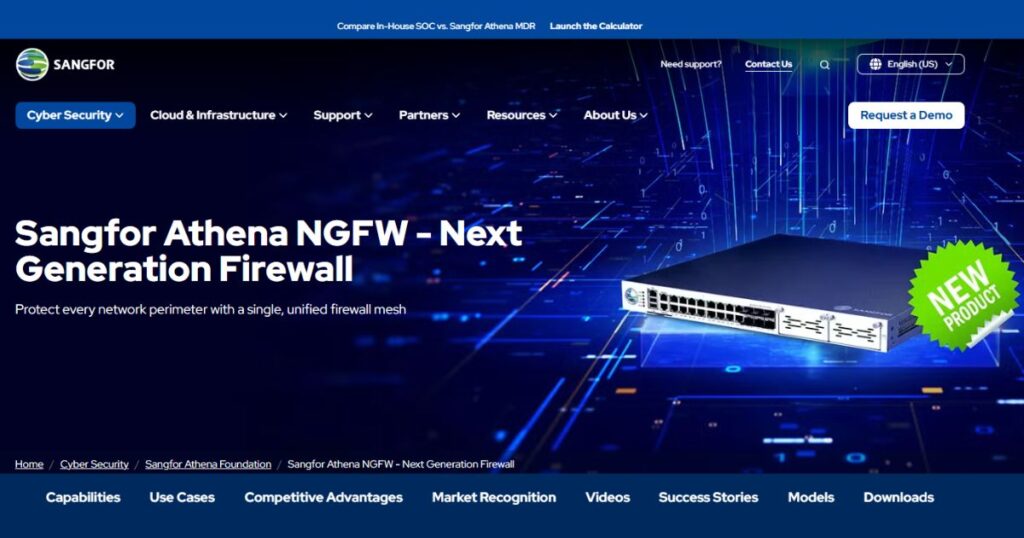
AI-driven firewalls use machine learning to evaluate traffic behavior and make decisions in real time. Instead of depending on fixed allow or block rules, they analyze how users and applications normally communicate and identify activity that looks suspicious.
Many of the solutions used by our clients today come from industry leaders such as Cisco, Sangfor, Dell Technologies, and Alibaba Cloud. These partners offer firewalls that not only block unauthorized traffic but also learn from emerging threat patterns across global networks.
Endpoint Detection & Response Platforms
EDR and XDR solutions evaluate how processes behave on laptops, servers, and virtual machines. They are essential for detecting malicious scripts, unauthorized system changes, or attempts to disable security controls.
When a threat is identified, these platforms can isolate the device automatically to prevent further impact. Our company frequently works with technologies from WithSecure, ESET, Microsoft, and Trend Micro to deliver these capabilities. For organizations with remote or distributed teams, this layer has become a critical part of maintaining visibility and enforcing consistent security across all user devices.
Network Monitoring & Analytics
AI-enabled monitoring platforms examine traffic patterns across on-premise networks and cloud environments. They help uncover lateral movement attempts, internal scanning, and communication with suspicious destinations. This visibility is important in multi-site environments, where network behavior can change quickly and manual monitoring becomes difficult.
Email & Messaging Security
Email remains one of the most common ways attackers target employees. AI-powered email security tools evaluate message content, sender reputation, link behavior, and the structure of attachments. They can identify impersonation attempts, clone phishing techniques, and even machine-generated messages that mimic a company’s internal communication style. This helps protect users from the evolving phishing tactics seen across Malaysian businesses today.
Cloud Security Analytics
Organizations using Microsoft 365, Google Workspace, AWS, Alibaba Cloud, or multiple SaaS applications often operate in distributed environments. AI-driven cloud security tools help monitor identity activity, access behavior, and risky configuration changes. They give internal teams the visibility needed to secure data across several platforms without relying on manual reviews.
Ransomware & Data Protection Solutions
Modern backup and data protection platforms use AI to detect unusual file activity and identify signs of ransomware early. If suspicious behavior is detected, the system can trigger rollback actions, block specific processes, or protect storage targets from being encrypted.
Callnet Solution works with leading technologies from Veeam, Druva, Arcserve, Dell Technologies, and Nutanix to deliver these capabilities. By combining intelligent detection with automated recovery, organizations gain a stronger defense against one of the most disruptive threats facing Malaysian businesses today.
Together, these tools form the foundation of a modern AI-enabled security posture. Each layer adds a different type of visibility or control, and when combined, they significantly reduce the risk of prolonged downtime or undetected compromise.
How Can Callnet Solution Help Business Organizations Adopt AI-Driven Security?
Once a business decides that AI security is the next step, the challenge often lies in choosing the right tools, configuring them correctly, and integrating them into existing operations.
This is where Callnet Solution adds value.
Our team helps organizations assess their current environment, identify gaps, and determine which AI-driven solutions fit their needs and budget. We work with technologies from partners such as Cisco, Dell Technologies, Nutanix, ESET, Microsoft, Trend Micro, Veeam, Druva, Arcserve, and Alibaba Cloud to design a security stack that is both practical and scalable.
We also assist with deployment and ongoing optimization, including configuring monitoring policies, fine-tuning detection rules, integrating alerts with workflow tools, and ensuring that response actions align with your internal processes. For teams with limited in-house security resources, this partnership provides a clear path to improving visibility and strengthening protection across cloud, network, and endpoint environments.
To explore how AI-driven cyber security can fit into your organization, you can learn more at our Solutions page.
Frequently Asked Questions
Is AI security too expensive for small and mid-sized organizations?
Not necessarily. Many AI-driven tools are available as cloud-based or subscription services, which means you can adopt them in stages and scale only when needed. Costs often balance out because AI reduces manual investigation time and lowers the likelihood of costly incidents.
Can AI stop zero-day attacks?
AI does not rely only on signatures, so it can detect unusual behavior even if the threat is new. By analyzing how files and processes behave, AI systems identify early signs of zero-day activity and trigger containment actions much faster than traditional tools.
Do AI security tools work with both cloud and on-prem environments?
Yes. Modern security platforms are designed to monitor applications, servers, and user activity across hybrid setups. This helps organizations maintain consistent protection even when systems are spread across office networks, remote users, SaaS platforms, and public cloud services.
Does AI replace human cybersecurity teams?
No. AI enhances security operations by reducing noise, filtering alerts, and automating repetitive tasks. Human oversight is still required for strategic decisions, threat validation, and policy governance.
Conclusion
AI-driven security is now a practical necessity for organizations operating in fast-moving, cloud-heavy, and distributed environments. Modern threats evolve too quickly for manual tools to keep pace, and you need systems that can spot unusual behavior, investigate instantly, and respond before damage spreads.
For Malaysian organizations, the rise of hybrid work, multi-cloud adoption, and stricter compliance requirements makes AI-enabled protection especially relevant. It strengthens security teams, reduces alert fatigue, and introduces automated safeguards that were not possible a decade ago.
As threats continue to advance, companies that integrate AI into their security operations will be better positioned to manage risk and maintain continuity. With the right tools and support, AI becomes a strong, sustainable foundation for long-term protection.