Most small and mid-sized businesses in Malaysia do not have a dedicated security team. They have a few IT staff, a handful of cloud services, email running on Microsoft 365 or Google Workspace, and a long list of higher priorities than reading threat reports. Yet they are the businesses attackers find easiest to reach.
This guide explains what cybersecurity services cover and, more usefully, the order in which a growing organization should secure things. The goal is not to buy every tool at once. It is to fix the few controls that block the largest share of real attacks first, then build outward. A short readiness checklist at the end will help you prepare a focused conversation with a provider.
What do cybersecurity services cover for a Malaysian SME?
Cybersecurity services combine technology, monitoring, and expertise to protect your identities, data, devices, and networks — usually delivered as a managed service so you don’t have to staff it in-house. For an SME, a complete program spans seven practical layers:
- Identity and access
- Email security
- Endpoint protection
- Network and firewall
- Backup and recovery
- Monitoring and response
- User awareness training.
A good provider treats these as a connected system rather than a shopping list. Identity protection reduces account takeover; email security cuts off the most common delivery method for attacks; endpoint and network controls contain what does get through; backup and recovery lets you survive the worst case; and monitoring ties it together so someone notices when something is wrong. Most local cybersecurity providers package this alongside managed IT services, because day-to-day IT support and security are difficult to separate in practice.
Where should a business with no security team start?
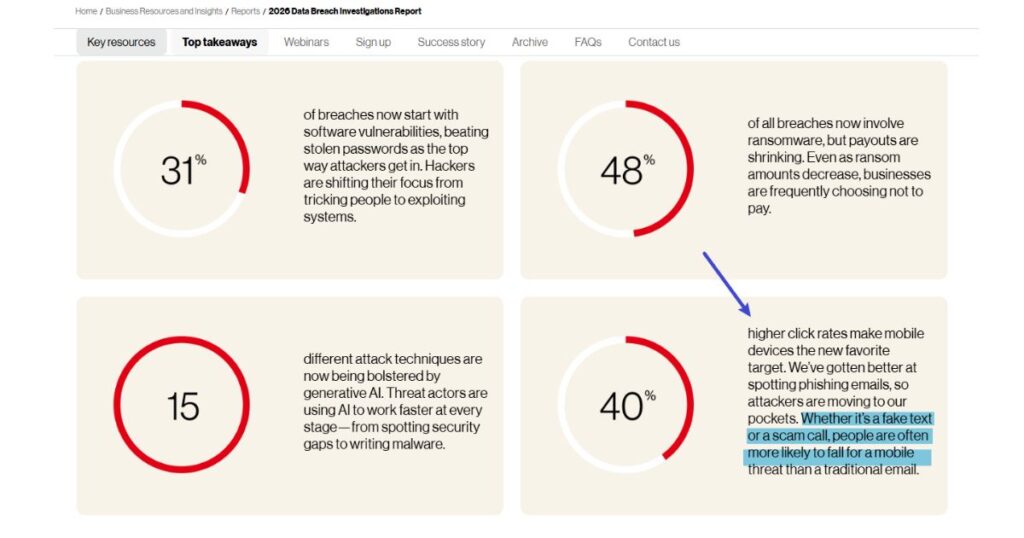
Start with identity and email, because that is where most real-world attacks begin. The Verizon Data Breach Investigations Report consistently finds that the majority of breaches involve a human element — someone tricked into clicking, approving, or handing over a password. In Malaysia, the pattern is the same: phishing-led fraud has made up the large majority of incidents handled by CyberSecurity Malaysia’s Cyber999 response center over the years.
That tells you where to spend your first ringgit. Expensive, advanced tooling adds little if an attacker can simply log in with a stolen password or trick an employee through email. Securing accounts and inboxes first removes the cheapest, most common path in; and it is also the most affordable layer to fix.
What is the minimum security stack, in priority order?
The minimum security stack is a prioritized set of seven layers, ordered so the controls that block the most attacks come first. You do not need all of them perfect on day one. You need each one addressed deliberately, with a clear owner.
How do you secure identities and accounts first?
Secure identities first by turning on multi-factor authentication (MFA) everywhere and giving each person only the access they need. MFA is the single highest-value control for the lowest cost: Microsoft has reported that it blocks over 99% of automated account-compromise attacks.
Beyond MFA, identity security means enforcing least privilege (no shared admin logins, no standing access “just in case”), using conditional access to limit sign-ins from unexpected locations or untrusted devices, and deprovisioning accounts promptly when staff leave.
If your business runs on Microsoft 365, most of these controls are already available in your licensing — they simply need to be configured correctly.
How do you protect business email against phishing and BEC?
Protect email by combining sender authentication with filtering and user vigilance, because email is the most common entry point for both phishing and business email compromise (BEC). The technical foundation is the trio of SPF, DKIM, and DMARC records, which make it far harder for criminals to impersonate your domain and harder for your messages to be spoofed.
On top of that, a managed email security layer filters malicious attachments and links, flags external senders, and detects the impersonation patterns used in invoice-fraud and CEO-fraud scams. Because phishing attacks target people rather than systems, email security and user training (below) work together—neither is complete on its own.
What endpoint protection do growing businesses actually need?
Growing businesses need more than traditional antivirus; they need endpoint detection and response (EDR) backed by someone who acts on the alerts. Legacy antivirus matches known signatures, which misses modern, fast-moving threats. Endpoint security adds behavioral detection, isolation of compromised devices, and the telemetry needed to investigate what happened.
For an SME, the practical question is who responds when an endpoint alert fires at 2 a.m. This is why endpoint protection is usually delivered as managed detection and response rather than software you install and forget. Patching also belongs here: keeping operating systems and applications current closes the vulnerabilities that attackers increasingly exploit as a first step.
Do SMEs still need a firewall and network security?
In short, yes. A properly configured firewall remains essential, and for multi-site businesses, network segmentation matters just as much. The firewall controls what traffic enters and leaves your network and is your first line of defense at the perimeter. Modern next-generation firewalls also inspect traffic for threats and enforce policy by user and application, not just by port.
Segmentation is the network equivalent of watertight compartments: separating guest Wi-Fi from staff systems, and point-of-sale or operational systems from general office traffic, so a compromise in one area cannot spread freely. For businesses with branches across the nation, consistent firewall policy and visibility across every site is part of a healthy server and network management practice.
How should backup and recovery be set up?
Set up backup and recovery on the assumption that you will one day need to restore everything—including after a ransomware attack. The widely used principle is 3-2-1: three copies of your data, on two types of media, with one copy off-site. The critical modern addition is immutability—backups that cannot be altered or deleted once written.
This matters because attackers go after backups directly. Veeam’s 2025 Ransomware Trends Report found that 89% of organizations hit by ransomware said the attackers targeted their backup repositories, yet only 32% used immutable backups. Strong data protection and backup is what turns a potential business-ending event into a recoverable incident—provided the restores are tested, not just assumed to work.
Why do monitoring and response matter more than tools alone?
Monitoring and response matter most because tools only help if someone is watching them and acting quickly. A firewall that logs an intrusion no one reviews, or an endpoint alert no one answers, provides a false sense of safety. Continuous threat monitoring triages alerts around the clock, investigates suspicious activity, and contains incidents before they spread.
For most SMEs this is delivered as a managed service, since 24/7 in-house monitoring is impractical at their scale. Effective system monitoring also includes a clear incident-response process: who is contacted, what gets isolated, and how you communicate during an event. The speed of that response often determines how much damage an incident causes.
How much does user awareness training reduce risk?
User awareness training meaningfully reduces risk because most attacks rely on a person, not a machine, making the wrong decision. When the majority of breaches involve the human element, training your team to recognize phishing, verify payment-change requests, and report suspicious messages is not a “nice to have”—it is a core control.
Practical training is short, regular, and reinforced with simulated phishing so staff learn by experience rather than slideshows. It is also the most cost-effective layer in the entire stack, because it improves the return on every technical control you have already paid for.
How do these controls relate to PDPA obligations in Malaysia?
These controls map directly to the technical safeguards Malaysian businesses are now expected to have under the Personal Data Protection Act. The Personal Data Protection (Amendment) Act 2024 brought significant new obligations into force on 1 June 2025: mandatory data breach notification to the Commissioner within 72 hours of a controller having reasonable belief that a breach occurred, notification to affected individuals within 7 days where the breach is likely to cause significant harm, and a mandatory Data Protection Officer for organizations that meet certain processing thresholds.
You cannot notify a regulator about a breach you never detected, and you cannot demonstrate reasonable safeguards you never implemented. Access control, encryption, backup, logging, and monitoring are exactly the measures that support both breach readiness and breach response.
* Note: This article is technical guidance, not legal advice. For compliance interpretation, refer to the official Personal Data Protection Department guidance and qualified counsel.
How do you choose a cybersecurity services provider?
Choose a provider based on the clarity of their scope and accountability, not the length of their feature list. Before requesting a proposal, get clear answers on a few questions:
- Scope: What exactly is included, and what is explicitly out of scope?
- Response: What are the response-time commitments for a security incident, and during which hours?
- Ownership: Who owns backup, who owns monitoring, and who owns patching?
- Reporting: How often will you receive reporting, and in what form?
A capable provider will ask you as many questions as you ask them — about your data, your systems, and your tolerance for downtime — because good security scoping starts with understanding your business.
A first-security checklist for Malaysian SMEs
Use this checklist as a readiness snapshot. Each “no” is a candidate for your first conversation with a provider.
- Identity: Is MFA enabled for every user, including email and remote access? Has admin access been limited to named accounts?
- Email: Are SPF, DKIM, and DMARC configured for your domain? Is there a filtering layer that flags impersonation and external senders?
- Endpoint: Are devices protected by EDR with someone responsible for responding to alerts? Are operating systems and applications patched on a schedule?
- Network: Is your firewall configured and reviewed, not just switched on? Are guest, staff, and operational networks separated?
- Backup: Do you keep off-site, immutable backups—and have you actually tested a restore in the last six months?
- Monitoring and response: Is someone watching alerts around the clock? Do you have a written incident-response process?
- People: Has your team had phishing-awareness training in the last year?
- PDPA: If a breach happened today, could you detect it, contain it, and notify within the required timelines?
If you answered “no” more than a few times, you are not unusual. Here at Callnet, many growing businesses we spoke to are in the same position. The value of working through the list is that it turns a vague worry into a clear, prioritized plan.
Securing the first layer first
The businesses that handle a cyber incident well are rarely the ones with the most tools. They are the ones that secured the fundamentals in the right order: identities, email, endpoints, network, backup, monitoring, and people. Each layer makes the next one more effective, and the earliest layers block the largest share of real attacks for the least cost.
If you would like help working through the checklist for your own organization, book a free consultation and we’ll help you map out a practical cybersecurity roadmap.